

A seaport
Why Corinth?
Not a quiet monastery waiting for a love poem. A busy Roman port: prosperous, competitive, religiously plural, socially divided. Trade. Status. Rhetoric. Ambition. Movement.
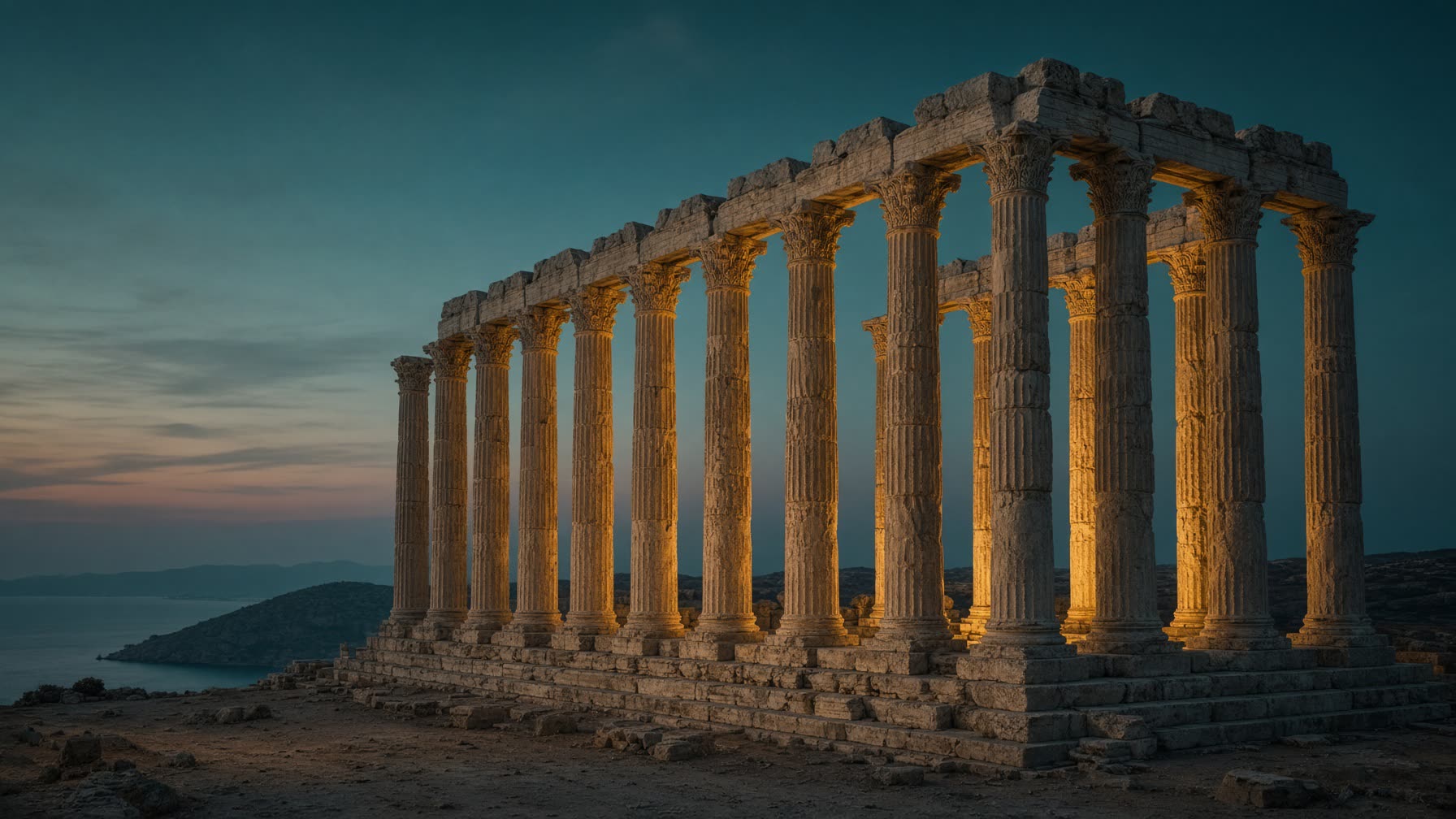
A seaport
Not a quiet monastery waiting for a love poem. A busy Roman port: prosperous, competitive, religiously plural, socially divided. Trade. Status. Rhetoric. Ambition. Movement.
Paul arrived around the middle of the first century and stayed long enough for a small community to take shape. Only a few years later, reports reached him that the house was already fracturing.
They had divided themselves around favorite teachers. They were taking one another to court. They argued about sex, marriage, food, freedom, worship, status, and spiritual gifts. At the communal meal, some ate well while others went hungry. Some gifts had become a stage. Knowledge had become another way to rank the room.
And still Paul opened the letter by calling them saints. Named first. Then asked to learn how to live the name. That matters here.
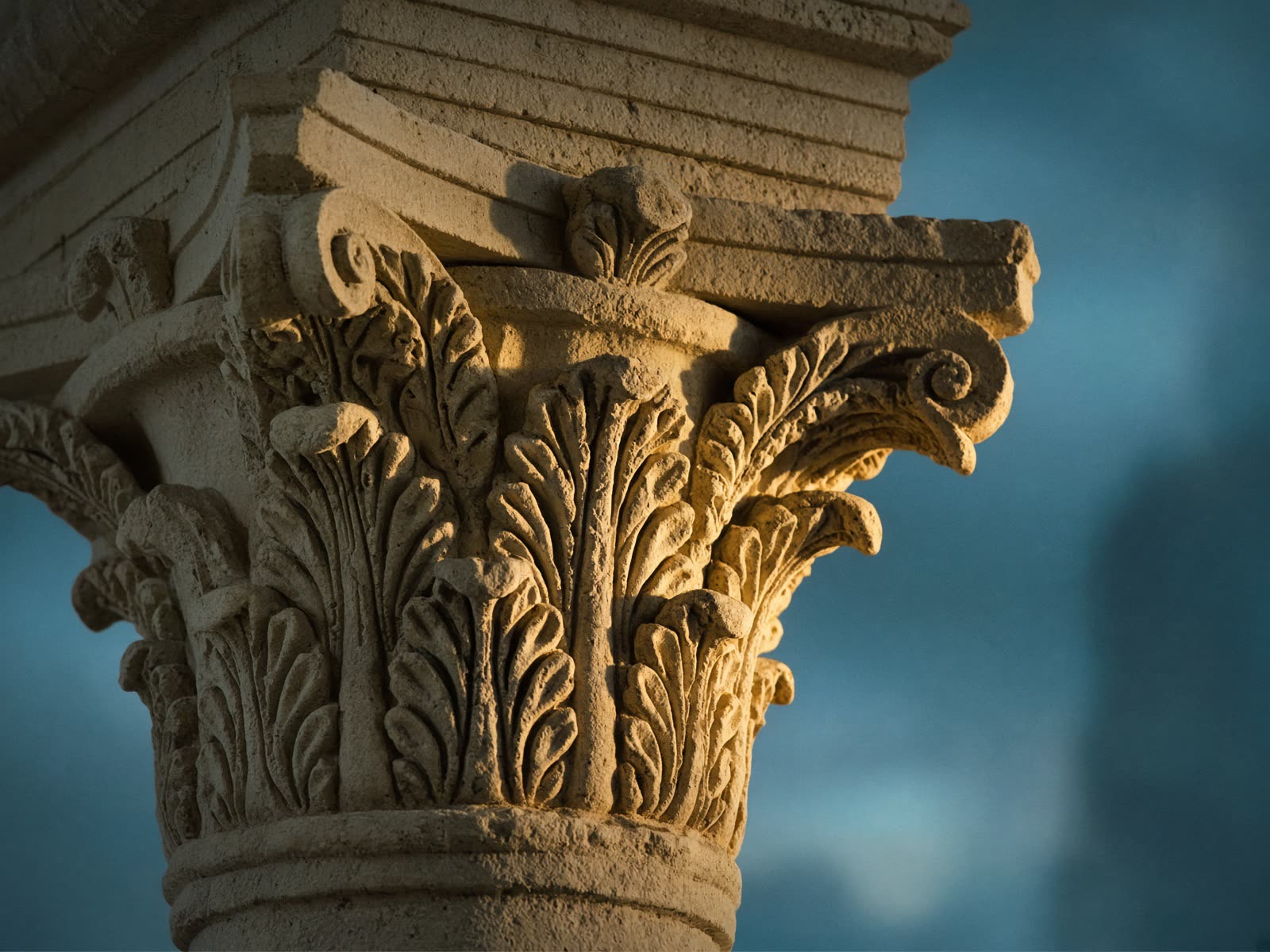
The invitation
Chapter 13 was not originally placed between satin ribbons at a wedding. It sits inside an argument about what spiritual maturity actually looks like.
Without love, eloquence becomes noise. Knowledge can become inflation. Prophecy can know mysteries and still miss the person standing beside it. Faith can move mountains and still fail the test. Even sacrifice can become spectacle.
Paul places Love in the center and asks every gift to pass through it. That is why Corinth belongs in this house. Not because its name happens to become forty-two.
The architecture
1 Corinthians 12
What have you been given?
Apostles, prophets, teachers, healings, tongues. A body with many members. Not a stage.
1 Corinthians 13
What governs the gift?
A still more excellent way. The measure. Without it, the rest is noise.
1 Corinthians 14
Does what you do build anyone up?
Speech returns to the gathered house. Prophecy, tongues, order. Does it build?

The love chapter
It is the measure. Gifts. Love. Edification. What have you been given? What governs it? Does it build?
The measure
01
Patient
02
Kind
03
Not jealous
04
Not boastful
05
Not arrogant
06
Not insisting on its own way
07
Glad with the truth
08
Bearing
09
Believing
10
Hoping
11
Enduring
“Let all that you do be done in love.”
“And now these three remain: faith, hope, and love. But the greatest of these is love.”
Corinth is a historical example of exactly what this house is trying to resist. Knowledge without humility. Gifts without service. Spiritual experience becoming status. Freedom exercised without regard for the other person.
Paul does not tell them to stop having gifts. He asks what those gifts become when governed by Love.
The letter came first. The quarrels came first. The gifts came first. The question of what actually builds another person came first. Then, much later, the name of that messy city happened to rhyme with a number this Book had already learned to notice.
A divided house received a letter asking what gifts become when they pass through Love. Centuries later, the name of that house happens to be a 42. Not proof. A wink. And perhaps an especially good one, because the letter itself keeps returning us from spectacle to practice.
01
What have you been given?
02
What does Love ask of it?
03
Does it build?
Corinth is a historical example of exactly what this house is trying to resist. Knowledge without humility. Gifts without service. Spiritual experience becoming status. Freedom exercised without regard for the other person.
Paul does not tell them to stop having gifts. He asks what those gifts become when governed by Love.
The letter came first. The quarrels came first. The gifts came first. The question of what actually builds another person came first. Then, much later, the name of that messy city happened to rhyme with a number this Book had already learned to notice.
A divided house received a letter asking what gifts become when they pass through Love. Centuries later, the name of that house happens to be a 42. Not proof. A wink. And perhaps an especially good one, because the letter itself keeps returning us from spectacle to practice.
01
What have you been given?
02
What does Love ask of it?
03
Does it build?
A wink
Counted the old way, letter by letter. Pythagorean reduction. Not proof. A rhyme you can see.
Gematria (and its Greek cousin isopsephy) is the craft of giving letters fixed values and adding a word into a total. You strip punctuation. You assign each letter a number by a named method. You add. Sometimes you reduce the total by digit-sum until a seal stops the fall: 24, 42, 69.
Different named methods can yield different, internally valid totals for the same phrase. They are different lenses, not competing proofs. A convergence is an invitation to look, not a demand that you believe a spell.
Number-patterning in biblical and later Jewish tradition long predates these English ciphers. They belong to different histories and should keep different offices. The English reduction of CORINTH landing on the same seal does not prove the letter. It rhymes. Rhyme is how a myth teaches you to notice.
Holy love = 42
Love is 18. Holy is 24.
Eight kinds in The Book of 42. Each qualifier is twenty-four. Love is the constant eighteen. Twenty-four plus eighteen is forty-two, every time. This house keeps the holy one, because holiness here is perfect love.
Epic
mythic scale
Rare
uncommon
Magic
transformative
Holy
consecrated
Pure
uncorrupted intention
Stellar
cosmic, orienting
Joyous
overflowing delight
Endless
beyond duration
Qualifier 24 + Love 18
Wesley’s holiness as perfect love. God is holy love.
Holy · 24
Love · 18
Pythagorean reduction
The fire that remains. Presence as a remaining, not a trophy.
Sacred · 23
Flame · 19
Pythagorean reduction
The apostrophe does not count. Neither does your unfinishedness.
Reverse reduction
Adams gave the culture an Answer. The cipher returns the Question by the reverse path.
01
A=1 through Z=26. The most literal English face.
02
A=1 through I=9, then the cycle repeats. Often called Pythagorean. Love is 18 here. Corinth is 42.
03
A=26 through Z=1. Flip the alphabet ends, then add.
04
Flip first, then score the 1-9 cycle. The Octave of Love, as a title, is 69 here.
42
Israel walked forty-two encampments from Egypt to the edge of the promise. Number as a path, not a trophy.
42
Matthew writes the genealogy of Jesus as three fourteens. Fourteen times three is forty-two. A lineage that arrives.
42
Revelation keeps a season of forty-two months. A measured time under pressure.
42
A Jewish teaching counts forms of the Hebrew root אהב (ahav, love) forty-two times in the Torah. Another old rhyme to keep lightly.

Then, and now
He did not write to finished people. He placed an unfinished community inside a story larger than its failures.
The Book of 42 keeps the cipher. This house keeps the invitation: a letter to a messy church, calling them saints, teaching them that love is the measure.
Two ways
Write what is stirring. You do not need to be finished. Named first. Then walk. Love remains.
You write first. Sit. Then write what comes: a word, a picture, a warmth, a silence. Silence is also an answer.